Getting the keys to a new build is exciting, but it is also the best chance you will ever have to get defects fixed for free. Before you close, the builder must fix the snags on your list. After you move in, getting them back can be much harder.
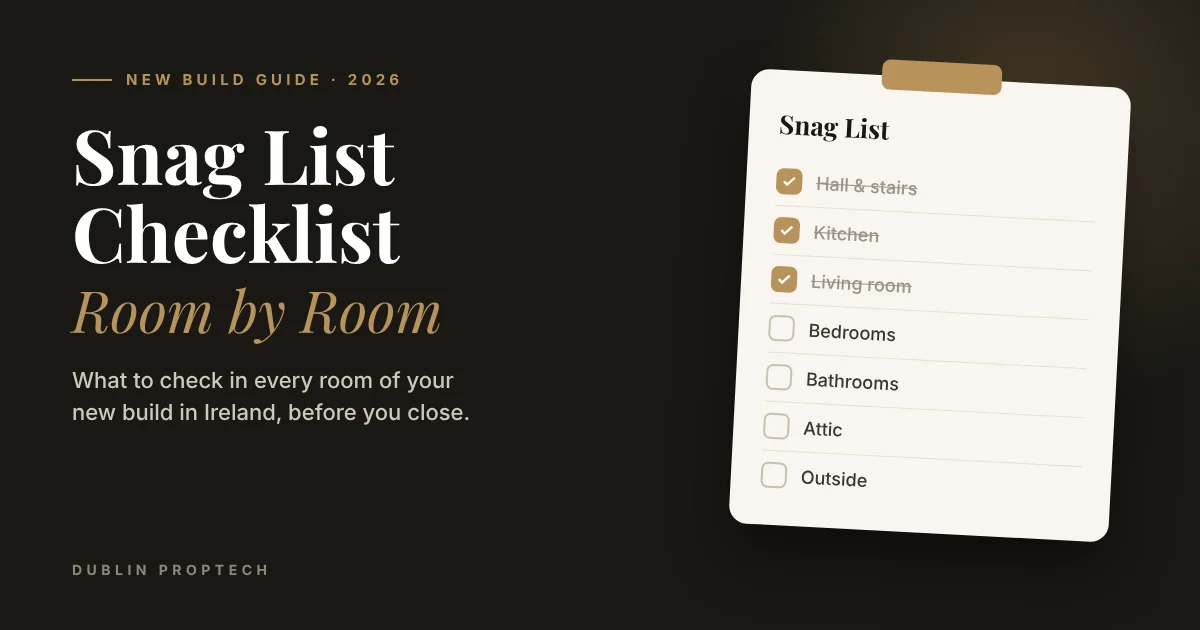
This room-by-room snag list checklist is the one we use as a starting point on our own inspections across Dublin. Print it, bring it to your snagging appointment, and tick off each room as you go. If you would rather have a professional do it for you, we explain the difference at the end.
Before you start: what to bring
A torch (many new homes are snagged before the power is fully on)A phone charger or power bank, to test sockets and take photosPainter's tape or small coloured stickers to mark each defectA spirit level and a tape measureA notepad, or this checklist printed outPlenty of time. A proper snag of a 3-bed house takes several hoursTake a photo of every snag, with a sticker next to it, and note which room it is in. Builders fix what they can clearly see on the list.
Hall, stairs and landing
Front door opens, closes and locks smoothly, with no draughts around the frameDoor seals are intact and the threshold is levelStair treads do not creak or move when you walk on themHandrail and banisters are solid, with no loose spindlesWalls and ceilings have no cracks, nail pops or patchy paintSkirting boards are fixed tight to the wall, with no gaps at cornersSmoke alarms are fitted on every floor and work when testedKitchen
All cupboard doors and drawers open, close and line up evenlyWorktops are level, with joints sealed and no chips or scratchesSilicone around the sink and worktops is complete and neatNo leaks under the sink. Run the taps for a few minutes and checkExtractor fan works and vents to the outsideEvery appliance that comes with the house powers onSockets and switches work, and plates are straightLiving room and dining area
Walls, ceilings and corners are smooth, with even paintWindows open, close and lock, and the glass has no scratchesWindow trickle vents open and closeRadiators or underfloor heating warm up evenlyFloors are level, with no dips, gaps or squeaksTV and data points are fitted where shown on the plansBedrooms
Doors close without catching on the frame or floorWardrobes (if included) are fitted level, with doors alignedWindows have working restrictors on upper floorsNo cold spots or damp patches near windows or external wallsLight fittings, switches and sockets all workBathrooms and en-suites
Toilet flushes properly, refills and is fixed firmly to the floorShower has good pressure and drains quickly, with no poolingTiles are level, with even grout lines and no cracked or hollow tilesSilicone around the bath, shower tray and basin is completeExtractor fan runs and clears steamNo leaks around the toilet, basin or shower when they are usedAttic
Attic hatch opens safely and closes tightly to stop heat lossInsulation covers the whole attic, with no gaps or squashed areasNo daylight showing through the roof, and no signs of dampPipes and water tanks (if any) are insulatedIf you plan to store things in the attic, ask how it should be boarded without squashing the insulation. We explain the options in our attic flooring guide.
Outside
Brickwork and render have no large cracks, stains or missing mortarGutters and downpipes are fixed and not leakingPaths, patios and driveways are level, with water draining away from the houseFences, gates and boundary walls are finished and secureExternal lights and sockets workWindow and door frames are sealed on the outsideExtra checks for A-rated homes
Most new homes in Ireland are now A-rated. The systems that keep them warm and cheap to run are where some of the most important snags hide:
Mechanical ventilation runs in every room, and the filters are fittedVents are not blocked, rattling or unusually noisyHeat pump has been commissioned and the controls have been explained to youGaps around pipes, windows, doors and the attic hatch are properly sealedYou have been given the manuals and certificates for the heating and ventilationDIY checklist or professional snag list?
A checklist like this will help you spot the obvious problems, and it is far better than nothing. But some of the costliest defects are hard to see without experience and the right tools, such as hidden moisture, missing insulation or electrical faults.
A professional snag list inspection covers 300+ points, uses thermal imaging and moisture readings, and gives you a photo report in 48 hours that you can send straight to the builder. Our fixed prices start from €200. You can see exactly what is included in our guide to snag list costs in Dublin, and if you are not sure whether you need a snag list or a full survey, read snag list vs house survey.
After the snags are fixed
Once the builder confirms the work is done, check every item again before you close, or book a re-inspection. Then you can start making the house your own. We also supply and fit flooring and stair cladding, so your new home is finished properly from day one.
Snag list checklist: FAQs
When should I do my snag list?
As soon as the builder tells you the home is ready for snagging, which is usually a few weeks before closing. That gives them time to fix everything before you complete the purchase.
Can I snag my own new build?
Yes, and this checklist will help. Many buyers still book a professional because they find more defects and give the builder a clear, photo-backed report.
Do apartments need a snag list too?
Yes. Apartments can have the same issues as houses, from paint and plaster to ventilation and plumbing. Skip the outside checks that do not apply and focus on the inside.
Ready to book? Book your snag list inspection and we will check everything on this list, and a lot more, before you get your keys.